
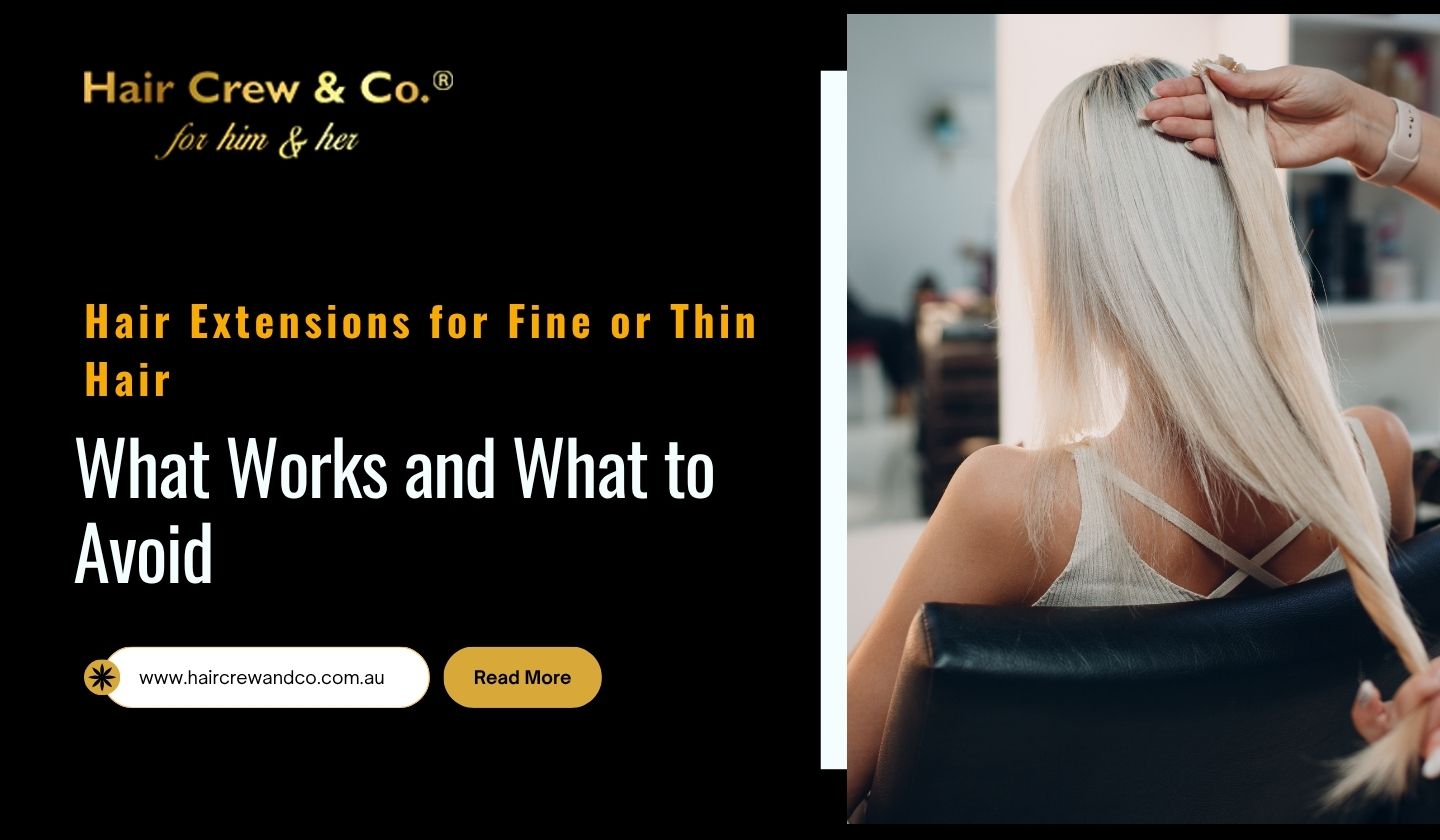
The sentence we hear most often at the extensions consultation is some version of the same worry. My hair is too fine for this. There is not enough of it to hold anything. It will just make the thinness more obvious.
Sometimes that worry is justified. Far more often it is not. Fine hair rules out certain methods, certain weights and certain lengths, but it rarely rules out extensions altogether. The difference between a set that looks seamless and a set that damages the hair underneath comes down to how much load each anchor point is asked to carry, and where those points sit.
Fine and thin are two different problems
These words get used interchangeably, and they should not be. Fine describes the thickness of each individual strand. Thin, or low density, describes how many strands you have. You can have a great deal of very fine hair, or a small amount of quite coarse hair, and the two situations call for different decisions.
Fine strands are the fragility issue. Each one snaps more easily, so heavy attachments do real damage. Low density is the visibility issue. With fewer strands, there is less hair available to lie over an attachment and hide it, so placement matters more than product.
Most people who say they have thin hair actually have both, and a stylist should be assessing them separately rather than treating your hair as one general category.
Why weight is the whole conversation
Every extension method transfers weight onto your natural hair. Your hair can carry a certain amount before the follicle starts protesting, and fine or low-density hair reaches that ceiling sooner.
This is why the method that suits your friend may be wrong for you. Thick bonded rows and heavy sew-ins concentrate a lot of weight on a small number of strands. On dense hair that is fine. On fine hair, it creates pull, and sustained pull on a follicle is what causes the thinning people blame on extensions in general.
Methods that spread weight across a wider surface area tend to work better. Tape-in wefts sit flat and distribute load across a broad section rather than a single point. Small nano or micro rings, used sparingly and sized correctly, can work well. Hand-tied and invisible wefts are lighter than traditional thick wefts. If you want the full comparison of methods, our guide to the main extension types covers how each one attaches.
The methods to be wary of are the heavy ones. Oversized beads, thick fusion bonds and dense sew-in rows all put more strain on fine hair than it should be asked to take.
Placement matters more than you would expect
On dense hair, a stylist has coverage to work with almost everywhere. On low-density hair, coverage is the scarce resource, and it needs to be spent carefully.
That means keeping attachments well back from the part line and the hairline, where the scalp shows most. It means fewer rows rather than more, sitting lower on the head where there is more hair above to cover them. It also means accepting that some areas simply cannot take an attachment, usually the temples and the crown, which are the first places most people lose density anyway.
A good stylist will map this out on your head before ordering any hair. If someone quotes you a set without looking at your part, your crown and your hairline, that is worth noticing.
Be realistic about length
This is where expectations most often need adjusting. Extensions add length and they add some volume, but they cannot add density that is not there at the root.
If you take fine hair from shoulder length all the way to the mid-back, the ends will look sparse because the amount of hair has not increased proportionally to the distance it now has to cover. The result reads as thin and stringy rather than long and full. A more moderate jump, with the weight concentrated to keep the ends looking full, almost always looks better than the maximum length available.
The cut does the rest of the work. Extensions on fine hair need blending into your own hair so the join is invisible and the ends taper naturally. Booking your cut and styling with the same stylist who applied the extensions makes a noticeable difference here.
The warning signs to take seriously
Extensions should feel present but not painful. You should be aware of them for a day or so and then largely forget them.
What is not normal is persistent soreness, a headache that follows the placement of the rows, tenderness when you brush, or attachments that have slipped so far down that they hang loose. Any of these means the tension is wrong or the set has been left in too long, and it needs looking at rather than waiting it out.
Come back for your maintenance appointment when your stylist tells you to, not when the extensions look untidy. As your natural hair grows, the attachment point travels further from the scalp, and the leverage on the follicle increases. Leaving a set in well past its move-up date is the most common way people damage their hair with extensions.
One honest note. If your hair is thinning progressively, or you have noticed your part widening over months rather than the odd shedding season, extensions are covering a symptom rather than addressing it. That is worth a conversation with your GP or a dermatologist first, because some causes are very treatable when caught early.
Frequently Asked Questions
Can I get extensions if my part has started to widen?
Often yes, with careful placement, since attachments can be kept well away from the part line and set lower on the head. What matters is whether the widening is stable or still progressing. If it is still changing, get the cause looked at first, then revisit extensions once you know what you are working with.
Do tape-in extensions show through fine hair?
They can if they are placed too close to the surface or the sections are too thin to cover them. Done properly, the weft sits sandwiched between two layers of your own hair and stays hidden. This is one of the clearest differences between a well-planned set and a rushed one, and it is worth asking to see photos of previous work on fine hair specifically.
How much length can I realistically add?
Less than the maximum on offer, usually. The honest guide is that your ends should still look full at the new length. A stylist who talks you out of the longest option is generally protecting the result rather than under selling you.
Will my natural hair look worse when the extensions come out?
Your hair will feel flatter for a while because you have grown used to more volume, and you may see the shed hair that would normally have fallen out day to day collecting at the attachment points instead. That accumulated shedding is expected and is not the same as loss. Genuine damage looks different, usually short broken pieces at the attachment sites, and it comes from tension or overdue maintenance rather than from extensions themselves.
Book Your Hair Transformation with Hair Crew & Co
Bring us your hair before you buy the hair.
Extension hair is a considerable investment, and the wrong weight cannot be fixed after the fact. Come in and let a stylist look at your density, your part and your hairline first, then talk through which method your hair can actually carry and what length will look right at the ends. If we think a set would put your hair under strain, we will say so and suggest something else.
We fit extensions at both salons, seven days a week, and see clients from across the western Sydney suburbs nearby.
Parramatta
Shop 5078/159-175 Church St, Parramatta NSW 2150
02 9687 3313
Blacktown
Westpoint Shopping Centre, Shop 3070, Level 3/17 Patrick Street, Blacktown NSW 2148 (Level 3)
02 9674 2076
info@haircrewandco.com.au | haircrewandco.com.au
Bring reference photos if you have them. It makes the length conversation far easier.

